In 2026, Bumble statistics show the website still holds weight in online dating. The “women message first” setup drives part of that, sure, but growth tells the bigger story. Features keep shifting. The user base keeps stretching across regions and use cases. It doesn’t behave like a simple swipe app anymore.
More than 50 mn people use it each month. Presence spans 150+ countries, which changes how interactions play out, how expectations form. Some log in for relationships. Others test friendships or even business networking. According to analysts, this mix shapes behavior in ways most apps don’t manage. Match patterns look different. Engagement too.
We think raw numbers explain a lot here. User counts, swipe activity, age splits, all that. Revenue trends add another layer, slightly messy but useful. Then there are outcome signals, like reported relationships and marriages. Not perfect data, still, it points somewhere.
Maybe you already use dating apps. Maybe you don’t. Either way, these Bumble stats sketch a clearer picture of what happens on the platform in 2026, and what you might run into once you start using it.
10 Key Bumble Statistics
- Bumble has over 50 million monthly active users worldwide.
- Women initiate 70% of conversations on Bumble.
- Bumble’s gender ratio is approximately 60% men to 40% women.
- Bumble users swipe over 1 billion times every month.
- The average Bumble user spends around 27 minutes per day on the app.
- Bumble has been downloaded over 200 million times globally.
- Bumble’s fastest-growing segment is Gen Z (ages 18–24).
- Bumble’s premium subscribers increased by 30% year-over-year in 2024.
- Bumble BFF and Bizz collectively comprise 10–15% of total engagement.
- Roughly 1 in 4 Bumble users say they’ve found a long-term relationship on the app.
Bumble User Demographics
Total Number of Users
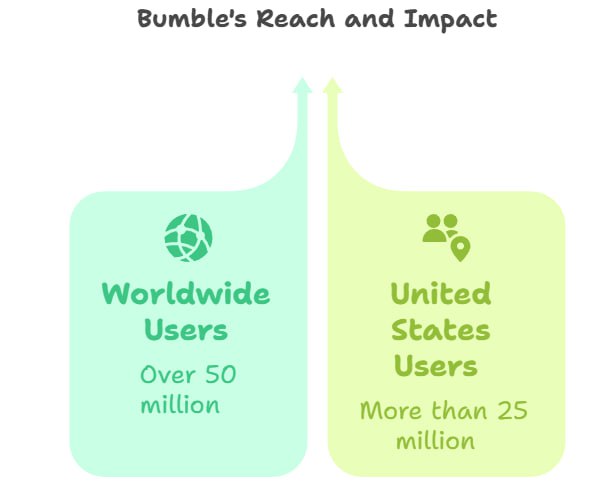
As of late 2024, it has over 50 million Bumble monthly active users worldwide. In the United States alone, the app is used by more than 25 million people, making it one of the top dating websites globally and a leader in terms of who uses Bumble (Business of Apps).
Bumble Male to Female Ratio
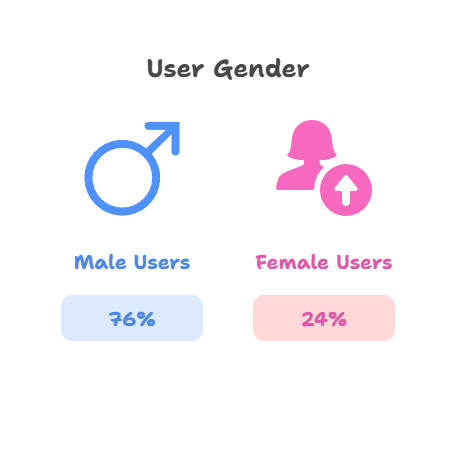
Bumble positions itself as a female-first app. The user split still leans male, and it does not hide.
About 76% of users are men. Around 24% are women. According to our analysts, this gap stays visible across the platform, even with features built for women.
We think the distribution looks more balanced than Tinder. Still, the skew remains clear, and it shapes how people interact inside the app. Maybe not obvious at first glance, but it shows.

Average Age of Bumble Users
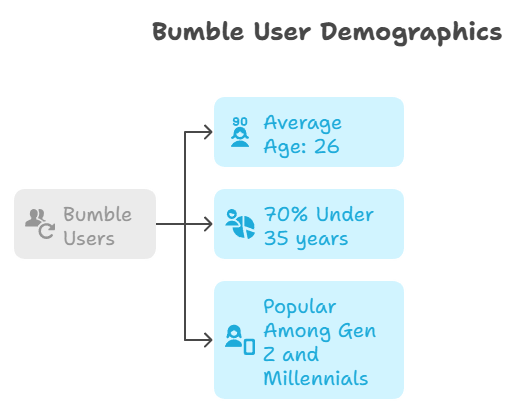
Bumble users cluster around a mean age of roughly 26. According to our analysts, more than 70% fall below 35, which skews the platform toward a younger cohort.
Gen Z shows strong uptake. Millennials too, and they stay active. We think the pull comes from product choices, a more progressive setup, inclusive design cues, small things that signal intent.

Average Bumble Matches for a Guy vs. a Girl
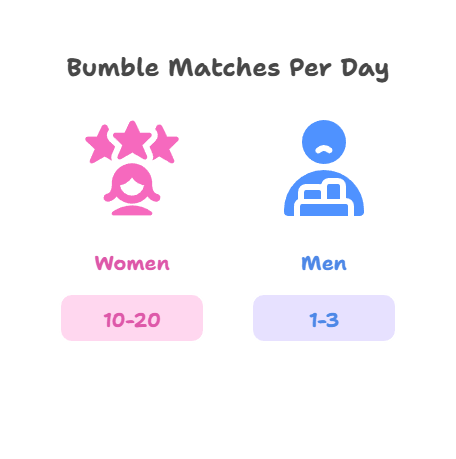
The average Bumble matches for a guy per day ranges between 1–3, while the average Bumble matches for a girl often lands between 10–20, reflecting higher selectivity and match frequency among women (Reddit [1]).
Relationship Goals
Bumble attracts users looking for a range of connections. According to internal surveys and third-party research:
- 82% of Bumble users are interested in serious relationships
- 18% are more focused on casual dating or friendships (Wikipedia.org)
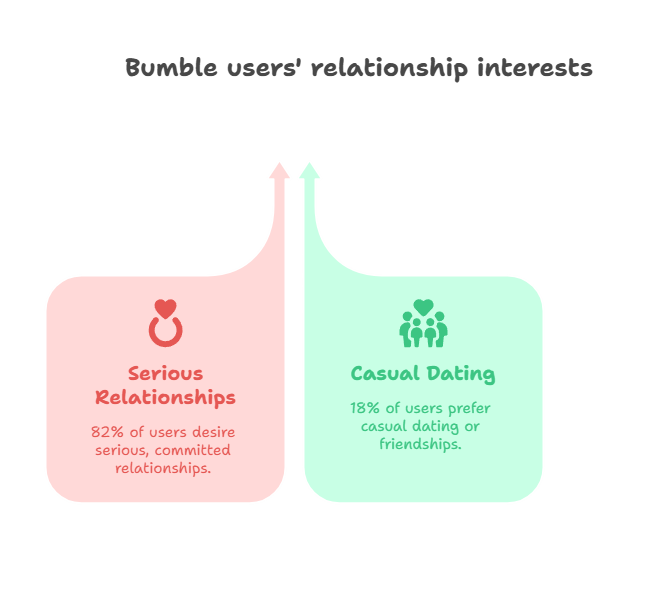

Bumble’s “Intentions” badge has helped users express their goals more clearly.
Most Common Professions Among Users
Bumble has reported that its users tend to be well-educated professionals. Some of the most common professions include:
- Software engineers
- Teachers
- Nurses
- Designers
- Entrepreneurs
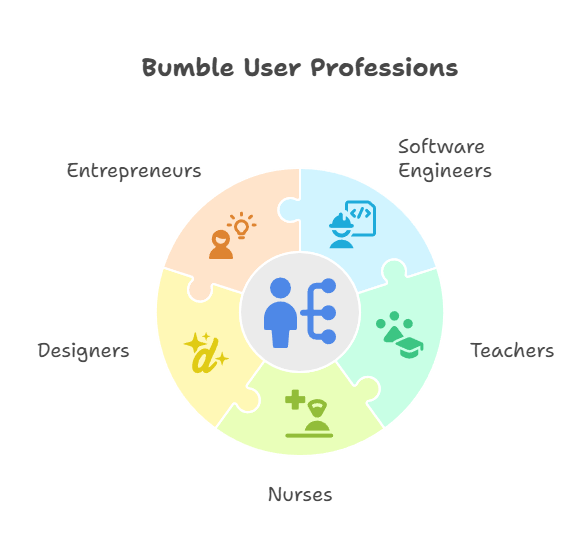

This aligns with Bumble’s appeal to educated millennials and Gen Z professionals who value ambition and personal growth. According to user data and discussions analyzed on platforms like, these careers frequently appear in user profiles (Reddit [2]).
Geographic Breakdown: Top Countries Where Bumble is Used
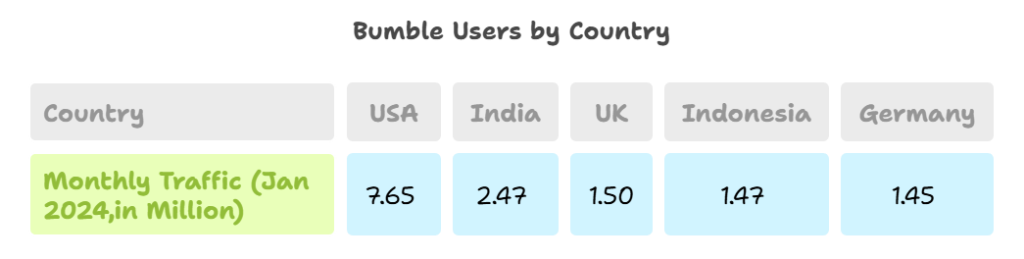
Bumble users by country are spread across 150+ nations, with key markets being (Monthly Traffic In January 2024 ):
- United States of America (USA) 7.65 Million
- India 2.47 Million
- United Kingdom 1.50 Million
- Indonesia 1.47 Million
- Germany 1.45 Million

Comparison: Bumble vs. DoULike
Bumble emphasizes momentum and user engagement, while DoULike prioritizes compatibility before conversation even begins. By comparing their audiences, matching logic, and pricing models side by side, the differences between fast-paced dating and intentional matching become clear.
| Category |   |  |
| Founded | 2014 | 2005 |
| Active Users | 50M+ monthly | 1+ million |
| Average Age | ~26 years old | 30–45 years old |
| Male-to-Female Ratio | 60% men 40% women | More balanced (boosted by free access for women) |
| Relationship Goals | 82% serious18% casual/friends | Primarily serious, value-based connections |
| Typical Professions | Tech, healthcare, education, design, entrepreneurs | Creative Fields, Medical, Business |
| Main Matching System | Swipe-based + women message first | ValueMatch based on beliefs & life priorities |
| Mobile Apps | iOS & Android | iOS & Android |
| Top Countries | USA, UK, Canada, Australia, India | USA, Canada, UK, Australia, Europe |
| Pricing Model | Freemium + multiple premium tiers | Free for women; men pay only if you get a response |
| Cost | Premium plans from ~$29.99/month | Star Membership: from $19.95/month |
| Best For | Young professionals who like guided swiping | People who want safe, value-driven dating with real profiles |
Bumble Match Statistics
Average Number of Messages Exchanged Before a First Date
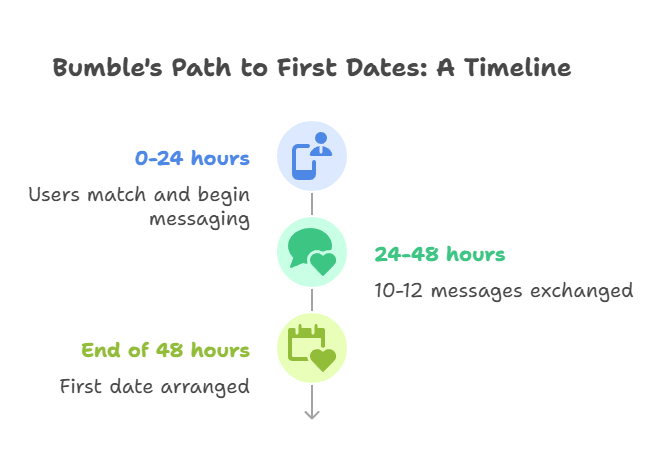
Users on Bumble tend to exchange around 10 to 12 messages before setting up a first date. This usually happens quickly. Often within the first 24 to 48 hours after a match. We think this short exchange window helps users test interest, filter weak signals, and move forward without wasting time. The process feels fast, sometimes abrupt, yet it works for early compatibility checks.

Bumble Acceptance Rate: How Often Do Users Say “Yes” to Potential Matches?
The acceptance rate on Bumble varies between genders:
- Men report that roughly 3% of the profiles they like turn into matches. Low, almost friction-heavy.
- Women, on the other hand, see about 35% of their likes convert into matches, a much higher yield per action.
This disparity highlights the differing behaviors and selectivity levels between male and female users on the website (Bumble).
Annual Revenue and Financial Growth Trends
Bumble posted $1.07 bn in total revenue for 2024. The Bumble app itself brought in $866.3 mn, up 2.5% year over year. Growth stayed positive, though not exactly punchy.
We think the picture shifts in early 2025. In Q1, the app generated $201.8 mn, down 6.5% versus the same quarter a year earlier. Maybe saturation plays a role, maybe competition just bites harder now. The space feels crowded, and users bounce.
ARPPU slipped too. It moved from $21.23 in 2024 to $20.24 in Q1 2025 (Bumble Inc.). Small drop, still signals pressure on monetization, honestly.
These figures point to a company adjusting its revenue mix while the dating market keeps changing shape.
Bumble Swipe Data
Bumble users generate over 1 billion swipes monthly. This Bumble swipe data showcases high engagement and app activity, particularly among Gen Z (EnterpriseAppsToday).
Subscription & Bumble Revenue Statistics
Total Number of Paying Subscribers
Bumble closed 2024 with roughly 2.8 mn paying users. The figure moved up 5% year over year.
We think this uptick ties to sharper premium tiers, small tweaks, maybe pricing discipline too. The company pushed features that nudge conversion, less noise, more intent. According to our analysts, that shift pulled in more subscribers and kept churn in check.
Breakdown of Subscription Plans and Their Popularity
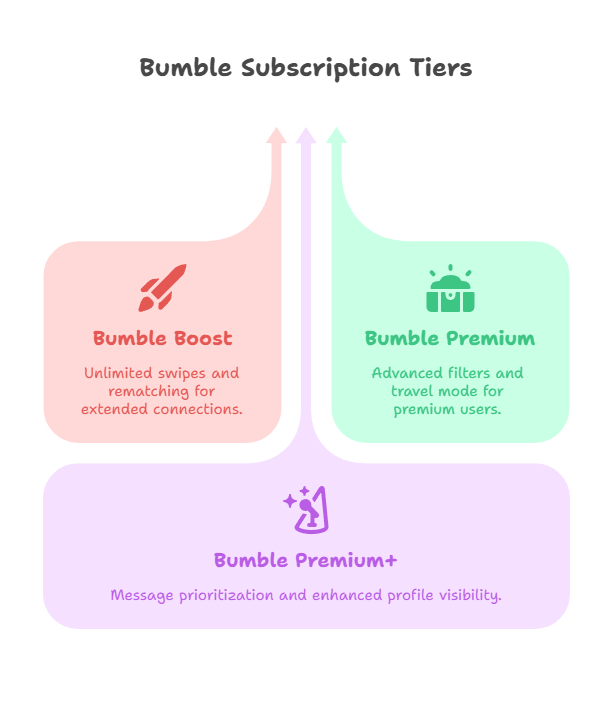
Bumble runs several paid tiers, each tuned for different user behavior and intent. Some want speed, others control, some just curiosity.
- Bumble Boost: Gives unlimited swipes, lets users reconnect with expired matches, and extend active ones. Simple, direct.
- Bumble Premium: Adds everything in Boost, then layers in filters, travel mode, incognito browsing, plus visibility into who already liked you. More control, more signal.
- Bumble Premium+: Launched in 2024. Packs in Premium features, then pushes further with message prioritization and stronger profile exposure. Feels like a push toward power users.
Bumble does not publish exact split by tier. We think that matters, but the company keeps it tight. Still, Premium+ entering the stack says a lot. They chase higher-value users, clearly.

Bumble Success Stories: The Marriage Factor
How Many Marriages Have Resulted from Bumble?
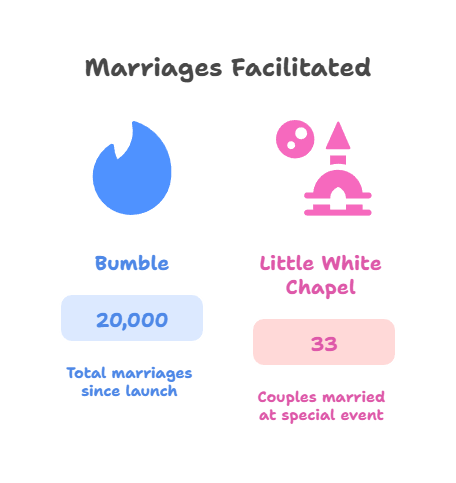
Since 2014, Bumble has generated more than 20,000 marriages. The figure stays blunt, almost stubborn. Easy to read, harder to dismiss. According to our analysts, it points to something practical. People do not stop at casual use, they move forward, commit, sometimes fast, sometimes after long pauses… depends on timing, mood, life stage.
In 2024, Bumble reached its ten-year mark and staged a mass wedding in Las Vegas. Thirty-three couples, all matched on the app, married at the Little White Chapel. A constructed event, yes, no one hides that. Still tied to real user outcomes. According to our data, moments like this communicate without overexplaining anything, just show it and move on.

Bumble Divorce Rates
Studies on relationships formed online point in two directions. Some data says couples who meet through dating apps face a higher risk of divorce early on. The gap shows up fast. Within the first three years of marriage, these couples appear six times more likely to separate than those who met via friends or family.
Other research pushes back. Analysts report that marriages that start online can match, or even beat, offline unions in terms of stability. Outcomes shift depending on the dataset, the sample, the way “online” gets defined. It gets messy.
No public data isolates divorce rates for Bumble users. Numbers out there cover the broader online dating market, not one platform. So drawing a clean line to Bumble alone doesn’t hold.
Bumble has helped drive thousands of marriages. That part is clear. Long-term outcomes sit elsewhere. Behavior, expectations, timing, personal fit. Those factors carry more weight than the app where people first met.
Is Bumble Still a Popular App in 2025?
Bumble keeps a solid position in 2025. Over 50 mn users worldwide, still active, still swiping. In the U.S., the app controls about 26% of the market, second place, right behind Tinder. Not dominant, but far from fading.
Conclusion
These Bumble statistics from 2025 show a female-first platform that keeps moving, even as rivals push hard. The user base stays large. Features keep shifting, sometimes fast. Match rates hold up. Revenue reaches bn-scale, serious money.
We think the signal is simple. People still use it. People still match. Whether someone checks how many users sit on Bumble, compares match rates for men, or scans country-level data, the takeaway stays blunt. Bumble isn’t going anywhere. It sticks.
Sources
- Business of Apps
- Reddit [1]
- Wikipedia.org
- Reddit [2]
- Priori Data
- World Population Review
- Bumble
- EnterpriseAppsToday
- Bumble Inc.
- Independent
Our Editorial Team at DoULike understands the challenges of today’s dating scene. That’s why we offer guidance on everything from online profiles to in-person chemistry. With our tips, you’ll feel ready to take the next step in finding love.
